Software as a Service (SaaS) has emerged as the preferred software delivery model for businesses of all sizes, allowing users to access applications via the cloud rather than through local installations. This model is characterized by its scalability, cost-effectiveness, and accessibility from any location. A key programming language behind many successful SaaS products is Python, acclaimed for its reliability, flexibility, and developer-friendliness. Python's rich ecosystem and rapid development capabilities, along with strong support for innovative technologies such as artificial intelligence and data analytics, make it an outstanding choice for SaaS development, catering to a range of businesses from startups creating their first Minimum Viable Product (MVP) to large technology corporations serving millions of users.
In this blog, we are going to explore why startups consistently choose Python for SaaS development, its key benefits, common use cases, and how it supports business growth.
What Is SaaS Development?
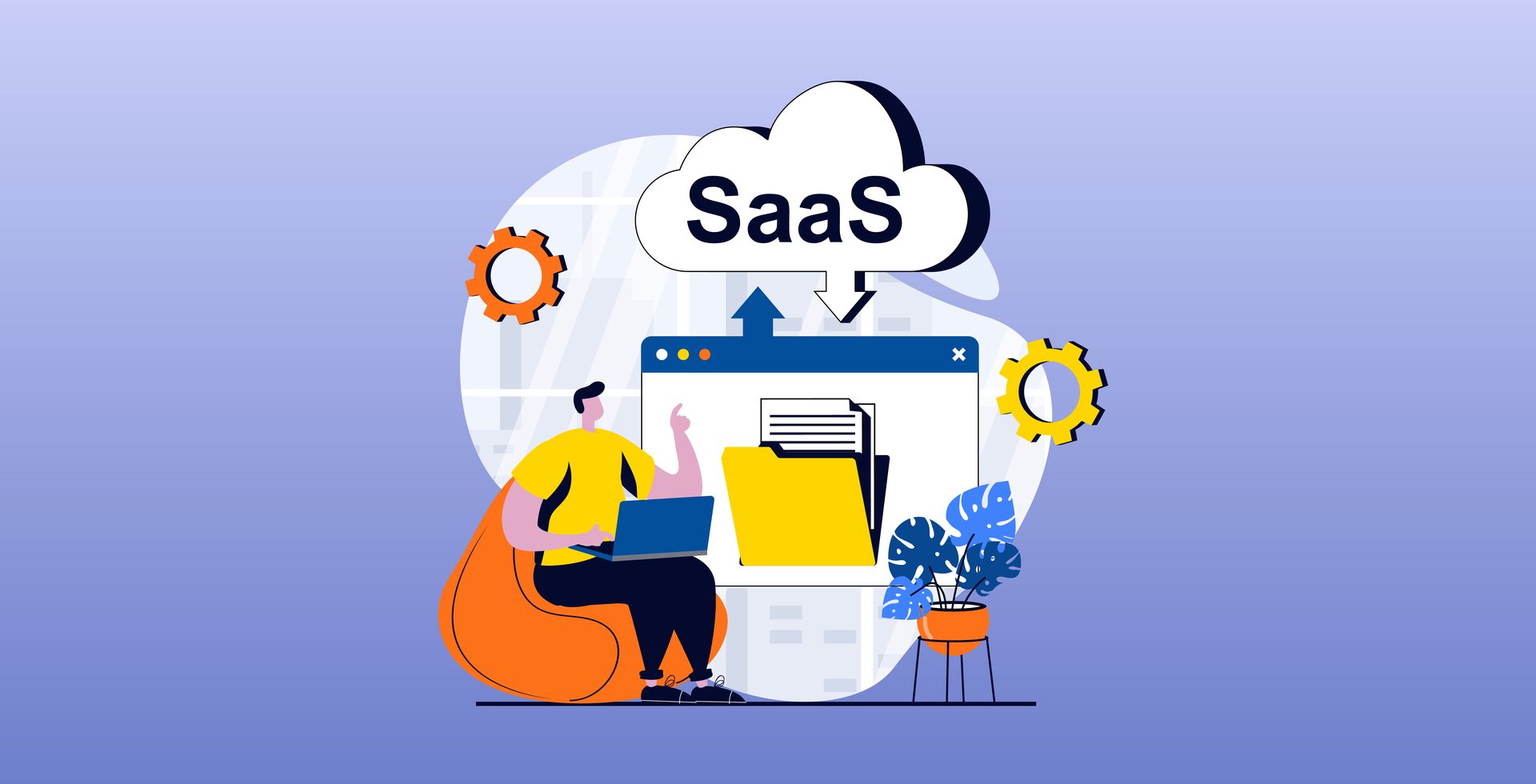
SaaS (Software as a Service) development involves creating cloud-based software applications accessible via the internet through subscription or pay-as-you-go models. Unlike traditional software, these applications are centrally hosted, enabling providers to oversee updates, security, and infrastructure, while users access them through browsers. Common SaaS products include project management platforms, CRM systems, accounting software, collaboration tools, HR management systems, e-commerce platforms, and customer support applications. The success of SaaS businesses hinges on continuous feature updates, scalability, and high availability, making the choice of technology stack crucial from the outset. Python has emerged as a preferred programming language for SaaS development due to its simplicity, performance, and scalability.
Why Is Python Popular for SaaS Development?
Python's popularity is attributed to more than just its simple syntax; it encompasses a robust ecosystem that aids startups in efficiently building, launching, and scaling applications. A key advantage is its capacity for enhancing developer productivity, as its clean, readable syntax enables teams to write less code while achieving more functionality. This results in shorter development times, easier maintenance, and smoother onboarding of new developers. Moreover, Python is enriched by a vast assortment of open-source libraries and frameworks that allow developers to bypass building common functionalities from scratch. Whether the requirements involve authentication, payment processing, API integrations, machine learning, or task scheduling, Python likely offers an established library that accelerates development.
This comprehensive ecosystem empowers startups to concentrate on creating distinctive product features instead of reinventing fundamental capabilities. The features includes;
1. Faster MVP Development
For startups, speed is often a competitive advantage. Getting a product into customers' hands quickly enables businesses to validate ideas, gather feedback, and iterate before investing heavily in additional features. Python excels at rapid application development. Frameworks like Django provide built-in features such as authentication, database management, user administration, security, and routing, allowing developers to build fully functional applications in significantly less time. FastAPI, meanwhile, enables teams to create high-performance APIs with minimal boilerplate code.
By reducing development complexity, Python enables startups to launch MVPs faster and begin generating customer feedback and revenue sooner.
2. Excellent Scalability
A common misconception is that Python is only suitable for small projects. In reality, many of the world's largest technology companies rely on Python to support applications serving millions of users. Python applications can scale both vertically and horizontally through cloud platforms, containerisation technologies, caching systems, load balancing, and microservices architectures. As a SaaS business grows, developers can optimize performance using asynchronous processing, distributed task queues, and cloud-native deployment strategies.
This scalability allows startups to begin with a simple architecture and gradually expand as user demand increases without completely rebuilding their platform.
3. Powerful Web Development Frameworks
Python offers several mature frameworks designed specifically for web application development.
Django is one of the most comprehensive web frameworks available. It includes authentication, an ORM, an administrative dashboard, form validation, session management, and numerous security features out of the box. This "batteries-included" approach makes Django an excellent choice for building complete SaaS applications quickly.
FastAPI has become increasingly popular for API-first SaaS products. Its asynchronous architecture delivers exceptional performance while automatically generating API documentation and validating requests through Python type hints.
Many startups combine Django for business logic and user management with FastAPI for high-performance APIs, creating a scalable and efficient technology stack.
4. Cost-Effective Development
Budget constraints are a reality for most startups. Python helps reduce development costs in several ways. Because Python's syntax is easy to learn and highly productive, development teams often complete projects with fewer hours than languages requiring more verbose code.
Additionally, Python's extensive open-source ecosystem reduces licensing costs and minimises reliance on proprietary software.
Python's large global developer community also makes hiring easier compared to more niche programming languages. Businesses have access to experienced developers, freelancers, and development agencies across different regions and budgets.
Lower development effort combined with lower maintenance requirements results in reduced overall ownership costs throughout the application's lifecycle.
5. Strong Security Features
Security is a critical requirement for SaaS applications, particularly those handling customer data, financial transactions, or sensitive business information.
Python frameworks incorporate numerous built-in security mechanisms that protect against common web vulnerabilities. Django, for example, includes protection against SQL injection, Cross-Site Scripting (XSS), Cross-Site Request Forgery (CSRF), clickjacking attacks, and insecure password storage. Python also supports modern authentication standards such as OAuth 2.0, JWT authentication, multi-factor authentication (MFA), encrypted communications, and secure session management. Combined with regular security updates from active open-source communities, these features help businesses build trustworthy SaaS platforms.
6. AI and Machine Learning Integration
One of Python's biggest advantages is its leadership in artificial intelligence and machine learning. As SaaS applications increasingly incorporate predictive analytics, recommendation engines, chatbots, intelligent search, fraud detection, and automation, Python provides direct access to industry-leading libraries such as TensorFlow, PyTorch, Scikit-learn, Pandas, and NumPy.
This makes it significantly easier for startups to introduce AI-powered features without adopting an entirely new technology stack. Whether adding customer behaviour analysis or generative AI capabilities, Python enables SaaS products to evolve alongside emerging technologies.
7. Easy Integration with Third-Party Services
Modern SaaS platforms rarely operate in isolation. Most applications integrate with payment gateways, CRMs, accounting systems, email platforms, cloud storage providers, communication tools, and marketing automation software.
Python simplifies these integrations through robust SDKs, REST API support, GraphQL compatibility, and thousands of available libraries.
This flexibility enables startups to connect their SaaS platforms with services such as Stripe, PayPal, Salesforce, Slack, Google Workspace, Microsoft 365, AWS, Azure, and countless other business applications.
8. Cloud-Native Deployment
Cloud infrastructure has become the standard for SaaS businesses, and Python integrates seamlessly with modern cloud platforms. Python applications can be deployed using Docker containers, Kubernetes clusters, serverless functions, or Platform-as-a-Service (PaaS) offerings. Major cloud providers such as Amazon Web Services (AWS), Microsoft Azure, and Google Cloud Platform offer extensive support for Python applications.
This cloud compatibility enables startups to deploy applications quickly while maintaining flexibility for future scaling.
Common SaaS Applications Built with Python
Python supports a wide variety of SaaS products across multiple industries. Businesses commonly use Python to develop:
- Customer Relationship Management (CRM) systems
- Project management platforms
- Accounting and invoicing software
- Learning Management Systems (LMS)
- Healthcare applications
- HR and payroll software
- Marketing automation platforms
- E-commerce management systems
- Customer support platforms
- Data analytics dashboards
- AI-powered business applications
- Workflow automation software
Its versatility makes Python suitable for both niche SaaS solutions and enterprise-grade platforms.
Why Startups Prefer Python?
Startups face challenges such as tight deadlines, limited budgets, and the need for constant innovation. Python facilitates rapid product development and reduces technical complexity, enhancing long-term scalability. Its clean syntax boosts developer productivity, while established frameworks like Django and FastAPI help minimize time-to-market. A wide range of libraries simplifies tasks like authentication, database management, AI integration, and cloud deployment. With a large global talent pool, Python enables startups to create reliable products affordably. Crucially, Python offers the flexibility to evolve, allowing startups to expand into new markets, integrate AI, or scale operations effectively as they grow.
In conclusion, Python has emerged as a premier technology for Software as a Service (SaaS) development, renowned for its simplicity, flexibility, and scalability. The language is supported by mature frameworks, a vast library ecosystem, and strong cloud compatibility, making it particularly well-suited for startups aiming to quickly launch and confidently scale their products. It provides founders, whether launching their first SaaS application or updating existing software, with the necessary tools to develop secure, high-performing, and adaptable cloud applications. By opting for Python, startups can streamline development processes, reduce costs, and prioritize delivering customer value while ensuring a robust foundation for long-term expansion.